Blog

  • My Thoughts on AI in Writing

    My Thoughts on AI in Writing

    Artificial intelligence used to be the stuff of science-fiction. Whenever we heard those words, or even came across any mention of “AI,” we imagined a utopian world where sentient robots carried out tedious or even dangerous tasks while humans were able to pursue more meaningful paths.

    However, movies, books, and video games blasted us with stories of the dangers of AI. Some people worried that computers gaining sentience would lead to our downfall, whether it’s via a supercomputer launching every nuclear missile across the world, or a robotic army enslaving the human race.

    Well, it’s now 2025 and fortunately nothing of the sort has happened, despite just how much artificial intelligence has advanced in recent years. That being said, there are concerns regarding how “intelligent” artificial intelligence has become, especially in the realm of art.

    Over the past few years, many AI-backed language learning models (LLMs) have emerged, from OpenAI’s ChatGPT, to Google’s Gemini. These programs have made their way into various assets, from summarizing social media comment sections, to providing condensed search results on popular search engines.

    Plenty of other companies have utilized AI and LLMs into their business models. AI can be used to develop full sales strategies, generate pages of written copy, analyze marketing analytics, and more. AI is also able to create images and entire videos with sound! From a certain point-of-view, it’s incredible to see how far we’ve come technology-wise. But many people, including myself, are wary and apprehensive about what this means for the future.

    There is a large conversation to be had about AI replacing a large portion of the human workforce. Certain programs can drive taxis, sort and deliver packages, and even analyze medical x-rays. But since I am a “creator,” I want to specifically discuss AI in the art world, specifically AI in writing.

    Admittedly, I use AI (ChatGPT specifically) for certain tasks. I’ve used it to help explain a concept to me that I had trouble understanding, I’m using it to develop a social media marketing plan for an upcoming book launch, and I’ve used it to assist with managing a budget. There’s one really cool feature in one of my school textbooks where AI can take a chunk of text and generate a quick little refresher quiz to assess how well I know the material. In these aspects, I think AI is a fantastic tool.

    But there are problems when it comes to writing. I once tried having AI edit and critique a short story I wrote. It gave some positive feedback and said there were no edits to be made. This may be obvious, but it felt very… disingenuous. Many LLMs are defaulted to giving “positive” responses unless the user specifically configures them to be more “fair” or “unbiased.” At the end of the day, the user has control over how the AI reacts, which, to me, means it’s not really artificial intelligence (again, I’m specifically referring to commercially-available AI programs like ChatGPT or Gemini).

    I sent the short story to several beta readers who also enjoyed it, and I found myself more welcoming of their feedback because it felt genuine and “real.” From then on, I refused to use AI in my writing endeavors – it strictly remained a tool to help me out with other tedious tasks.

    As I’ve discovered, not every writer shares the same perspective as me. I’m part of several writer groups on Facebook and have seen so many authors who stated they are using AI to churn out their books from now on. They feed samples of their writing into an LLM, and then they’re able to produce stories in minutes, like a cheaper, faster ghostwriter. They then take it a step further and have AI generate cover images to be used for their books. I actually left one group I had been part of for almost a decade because the group founders/admins actually encouraged the use of AI to rapid release books.

    I hate to sound like a pretentious cynic (like people who talk about how the Fast and Furious movies are “ruining cinema”), but I have to say it: using AI in this manner is destroying art in so many ways.

    First, AI imagery and content are not original. These programs use existing content from the internet to produce their material. This is tantamount to plagiarism in my eyes. Some LLMs have content policies in place to minimize IP violations, but there are easy workarounds if someone were committed enough. There was recently a scandal about an indie author who had an LLM rewrite a section of their book in the style of another more prolific author (I am not going to link it because I do not want to draw attention to their books).

    Next, and this may sound a little cheesy, AI content is soulless. I know I am not alone in this, but it’s incredibly easy to spot generated written content. If it’s meant to be an informative article or blog post, then I don’t mind the AI as long as the information is correct (I promise I am not using AI for this post). However, if I’m reading a book or an editorial column and I get a whiff of AI, then I stop right there. Don’t get me started on how obvious AI photos and videos are (though, they are still an impressive display of the advanced technology so I have to give some credit).

    Another point is regarding rapid releases. Personally, I can’t do rapid releases of my books. I just don’t have that kind of drive. Other authors are able to churn out high-quality books by the boat-load. Meanwhile, I’ve been working on the third chapter in The Storyworld Saga for close to a decade.

    But using AI to do rapid releases doesn’t sit well with me. AI content is drivel, but flooding the market with said drivel only hurts authors. Self-publishing already gets a bad reputation because it allows people to push their work out into the world with ease. This is great for people who struggled to get an agent (like myself), but then you get plenty of poorly written, poorly edited books on the market that frustrate readers and make them hesitant to choose indie authors in the future. In my opinion, using AI to fully write and edit books will only contribute to that growing problem.

    Finally, and this may sound a little gatekeep-y, but it’s based on personal experiences: AI is making people respect creators less.

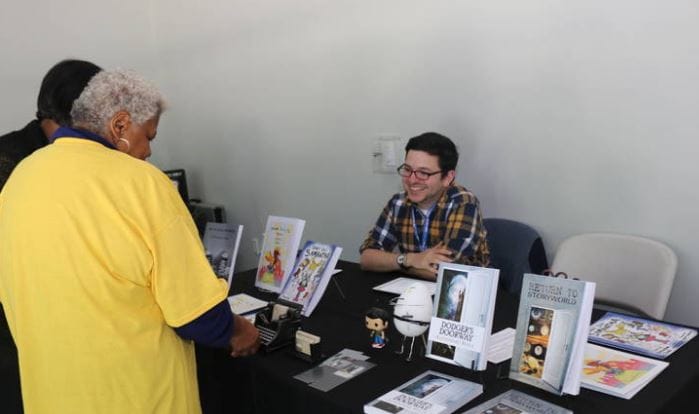
    I did a book event about a year or two ago and had someone walk by and say something along the lines of, “Why would I buy a book when I can just use AI to make one?” I tried to argue that it won’t be as special and he kinda chuckled and walked away (thankfully, because I did not feel like dealing with that). I saw an Instagram reel of a video (I can’t remember what it was about) but when I read the comments, there were plenty of parents talking about how they no longer buy children’s books because they can simply ask ChatGPT to write a story for them in seconds.

    Writing a story, drawing a picture, playing a song – any type of art requires two things: talent and passion. AI and LLMs lack both of those factors, and they’ll never develop them, no matter how advanced they become (I don’t care what Steven Spielberg tells us).

    All these programs do is produce content, and art is not content. It hurts to see people treat it as such. We are not just “sitting around, doodling” or “writing our little fairy tales.” We are working hard, sometimes spending hours late into the night, to create something that we hope will make an impact on the world. Sure, it’d be nice to make a living from it, but 99.999999% of creators are creating art not just because they want money, but because they want to express an idea to the world and evoke a genuine feeling from their audience.

    As far as I’m concerned, AI will never be able to do that.
  • Feeling Trapped: What Is Agoraphobia?

    Feeling Trapped: What Is Agoraphobia?

    I’ve been pretty open about my anxiety over the past several years. All my close friends and family know I deal with it, and even a majority of my readers know about it too (I mean, I wrote an entire book about it). But I don’t think I’ve ever really spoken about my experience with diagnosed agoraphobia (or as I call it, anxiety’s annoying little brother). So I’m writing this post to shed some light on it.

    I’m sure a lot of people have heard about agoraphobia, but unless you’ve experienced it, have studied it, or know someone with it, you may not fully understand. When I’ve mentioned it to people in the past, they assume it means I’m afraid of crowds. That’s like the Cliff’s Notes explanation. It’s an okay general overview, but that’s not all that it is. There’s more depth to it.

    Let me use an example (because that’s my favorite way to explain things).

    I do not like flying. I’ve flown several times in my life, from one-hour domestic flights, to 9-hour transatlantic journeys. If possible, I try to avoid flying. Many people automatically assume that I don’t like flying because I’m afraid of things like turbulence or heights (yeah, I’m not a fan of heights, but that’s not my main concern on a plane). The real issue comes down to feeling “trapped” on a plane.

    I’ve driven from Pennsylvania to North Carolina twice. That’s like a 10-hour drive. But I would take that over flying for the same length of time because I don’t feel trapped. If I don’t feel well in the car, I can always pull over. You can’t do that on a plane. You can’t even really do that if you’re taking a train or bus either (I guess technically you could if you put up enough stink, but I digress). The point is you can’t “pause” on a plane trip. Hence the feeling of being trapped.

    Another example: in my first semester of college, I had a class with a very strict teacher. He forbade anyone from leaving class at all, even for the bathroom (he stated it was a distraction). It was an hour-long class, which doesn’t seem long, but being told you can’t leave at all is a little uncomfortable. I regularly got mini anxiety attacks in that class because, once again, I felt trapped.

    Let’s go with another example that takes a different route. My agoraphobia became really severe the summer before my final year at college. I could barely leave my house without having a panic attack. I couldn’t even go to the doctor for an emergency visit about my anxiety because I was afraid to leave the safe space of my home.

    Okay, one more example. In my younger days as a bachelor, when I started dating, I was very cautious about where I went on dates. I never took anyone to dinner because I once again felt trapped in the middle of so many people. I also had an issue of getting anxiety attacks randomly while eating, which only exacerbated them, so restaurant dates were out of the question.

    The only place I ever really took dates was to the movies, and I always made sure we sat on the edge of the row so, if I were to start feeling anxious, I could go walk outside and do my anxiety-fighting routine (I’ll explain shortly) with minimal disturbance.

    Are you starting to see a pattern?

    Agoraphobia has an interesting linguistic origin. An agora was a central meeting place/market in Ancient Greece. And we all know how phobia essentially means “fear.” So we have a fear of the marketplace. By the way, I was even afraid to visit the grocery store during my severe agoraphobic phase.

    When I have an anxiety attack, I have a specific routine I follow to help combat it. It mainly involves pacing and catching my breath. I can do that safely in the confines of my own home, but if I get an attack in public, there’s very little chance I can do that. I certainly couldn’t pace in that class I mentioned. Or on a plane. But if I’m in control of my environment, like when I’m driving, I’m all good because I can pull over. I can address my anxiety without issue.

    Another component of my agoraphobia is almost a fear of “what ifs.” When I have an anxiety attack, I’m worried about what if I pass out. I don’t want to faint in public because A) it’s embarrassing, B) I’m not sure how people would react (like if they would help me or ignore me). Since my anxiety attacks could happen at random times, I was afraid of being outside of my home due to my fear of fainting in public. This almost aligns with the slight misconception that agoraphobia is simply a “fear of crowds.”

    We come back to my main point: the fear of feeling trapped, not just a fear of crowds.

    There are many ways to treat agoraphobia, such as cognitive behavior therapy, exposure therapy, support groups, and simple breathing techniques. Unfortunately, none of those worked for me as my agoraphobia progressed and became more severe. In my instance, I had to turn to medicine (and I don’t regret it one bit). Nowadays, I may have slight episodes where I feel anxious in a scenario where I’m “trapped,” but it no longer impairs my life as much as it did in the past.

    I primarily wrote this article to be informative since I see so many people unfamiliar with agoraphobia. Hopefully this will answer questions and make readers better understand how my mind works.

    For any readers dealing with agoraphobia, I don’t have a magic solution that will definitely work for everyone because we’re all so different. What I do want to tell you is these two things:

    • If you suspect you have agoraphobia, don’t feel bad or embarrassed about the fact. You’re not alone. There are plenty of other people out there who have conquered this fear, or are at least able to manage it.
    • Please seek professional help if you suspect you have agoraphobia. There is no one-size-fits-all solution for everyone, but speaking with someone with extensive knowledge and/or experience in agoraphobia (and anxiety in general) can potentially put you on the right path to treatment.
  • I’m Afraid of Making Mistakes; I Wish I Was Perfect

    I’m Afraid of Making Mistakes; I Wish I Was Perfect

    I’ve made a lot of mistakes in my life.

    When I was six years old, I said a bad word in class and had to go to the principal’s office.

    When I was eight, I accidentally threw a toy at a friend’s head… hard.

    At 17, I (lightly) damaged my first car because I was trying to be funny around my friends.

    At the age of 21, I rushed to publish my first book without properly editing it.

    When I was 30, I made a friend cry because of a mean-spirited joke.

    And then, whenI was 34 (two weeks ago). I made a logistical mistake during one of my volunteer assignments.

    This is just the tip of the iceberg of the mistakes I’ve made in my life. I know, I know: everyone makes mistakes. I even wrote a children’s book about it. Whenever people ask what inspired me to write We All Make Mistakes, I say it’s because I made a lot of mistakes growing up and I wanted to tell children that it’s okay. I say, “This is the book I wish I had as a child.” But the truth is that it’s also the book I need in adulthood. Unfortunately, as much I tell people that them making mistakes is okay, I can’t seem to convince myself.

    A Life of Making Mistakes

    I make A LOT of mistakes. I make them in my professional life and in my personal life. There are some mistakes that hurt my friends and some that hurt my family. There are small mistakes, like forgetting a bill payment, and then there are big ones, like forgetting a friend’s birthday.

    The thought of making mistakes terrifies me, especially when these mistakes can potentially hurt someone. I’ve talked with my therapist, and she helped me realize that my fear of mistakes comes from my desire to achieve perfection, which is impossible for any human. So why do I hold myself to such standards to be infallible?

    I look around and see others making mistakes all the time. It’s a part of life. But it looks like these other people don’t let these mistakes affect their lives as much as mine do. I know someone who accidentally ran a stop sign and caused a minor accident. There’s someone else who lost her company tens of thousands of dollars because she mis-typed a line in a purchase order. I know another person whose child hurt himself climbing a tree because her back was turned for a few moments.

    When I spoke with these friends about their mistakes, I reassured them that it was all okay. I told them that nobody’s perfect. I reminded them how life doesn’t come with an instruction manual. You’re going to make mistakes as you learn.

    Now why can’t I reassure myself the same way?

    Once again, I need to reflect on something I learned in therapy: we should talk to ourselves the way we would talk to a close friend. Most of the time, when someone close to me makes a mistake, I try to show compassion and reassure them. Very, very rarely will I give them grief for doing something wrong.

    But when it comes to my own mistakes, I take the opposite approach. I make a mistake and I think it’s the end of the world. I dwell on the mistake and make a silent wish that I could turn back the clock and undo it. More than 17 years ago, I went on a date and said something incredibly stupid that hurt my date’s feelings. I STILL occasionally think back on it and wish I could take it back. Or I wish I could travel back and slap 17-year-old me across the face.

    Why Can’t We Let Mistakes Go?

    I’m not exactly sure why I can’t forgive myself for making mistakes. Aside from my severe anxiety and depression, it could be a variety of other reasons as well. Maybe it’s because I’ve made several mistakes in the past that people constantly have to bring back up. I made a minor mistake at work back in 2019 and someone kept reminding me of it instead of moving past it. An ex used to frequently bring up my mistakes despite how much I disliked it. It’s pretty hard to forgive yourself for mistakes (no matter how small) if someone keeps reminding you of them.

    Another reason why some people (or at least I) have difficulty overcoming mistakes is possibly as a form of protection. By constantly thinking about the mistakes in our past, we believe we can avoid making future mistakes. We’re extra careful in what we say and do. We hesitate to do something out of fear. Our overthinking of past mistakes has us always being super-critical of our own actions. While this can help us be more considerate of what we say and do, it can come at the cost of our own mental well-being by forcing us to think that everything we do is wrong.

    Afraid to Experience Life

    I was slightly relieved when I learned I’m not the only person who has trouble letting go of their own errors. Apparently, a lot of people strive for perfection and wish they didn’t make mistakes. While I feel better knowing it’s not just me, it’s sad that this inability to overcome mistakes keeps people from properly living their lives.

    My mistakes definitely make me afraid to do things. There was a brief moment a few years ago when I considered going back to school for nursing. But I was terrified of being responsible for another person’s health and well-being. The last thing I want to do is find out I made a mistake that could potentially kill someone.

    I decided about two years ago that I would probably never have children because I’m afraid of making mistakes while raising them. Plenty of people have tried to make me reconsider by claiming that EVERYONE makes mistakes as a parent. I’m still hesitant about the thought of being a father. Maybe my mind will change in the future, if I can learn to forgive myself for making mistakes. As of now, it doesn’t seem to be in the cards.

    There have been countless times (especially this past year) where I’ve wanted to quit the whole “author” thing. I want to spread positive and inspirational messages with my books, but I think that, with all the mistakes I’ve made, I’m not the ideal role model for children. Many times, I’ve woken up thinking about how I should just clear out my inventory and live a non-writer life.

    In short: I have a bad habit of letting my mistakes (instead of my accomplishments or better qualities) define me. And it pains me to see the same thing happen to others.

    Advice for Others

    I wish I had some meaningful wisdom to grant to anyone who reads this blog. I want to tell you that making mistakes is okay; that in the grand scheme of things, some tiny error you’ve made is not a big deal. After all, mistakes are a normal part of life. All of this is 100% true, but I’m not sure how much value it holds coming from someone who can’t accept their own advice.

    One piece of advice that I can offer is regarding where you go when you want assistance with moving past your mistakes. You need to be careful, since there are some great resources out there, and there are some terrible ones as well.

    I’ve spent hours Googling different tips for forgiving yourself, overcoming mistakes, etc. What I’ve learned is that it’s a lot like when you Google your symptoms when you’re feeling sick: the worst results will be the most prominent.

    When I search for tips, I tend to get results from forums full of negativity. Here’s how it goes: someone will ask for guidance on forgiving yourself for mistakes, and responses will come from people saying that some shouldn’t be forgiven, especially if the person refuses to learn from them.

    I’m not denying there are people out there who intentionally do harmful things and write them off as mistakes to avoid accountability. For a while, I actually thought I was unintentionally doing that myself:

    If you couldn’t tell already, I am very open about my anxiety and my fear of making mistakes. A certain person (someone whom I once greatly respected) told me that I am only open about it so that people will “go easy on me” when I do make a mistake. He also told me it was “unacceptable” when I got upset over making an actual mistake.

    At the time, I thought what he said was right: maybe I only get so upset about making mistakes because I’m subconsciously trying to have people feel sorry for me so that I don’t get in trouble. So now, not only was I afraid of making mistakes, but I was afraid of expressing my fear of making mistakes or my unhappiness after I’ve made a mistake. And people wonder why I’m an anxious mess…

    So what’s the point of all this rambling? I want to remind people that a big part of moving past your mistakes is to ultimately be kind to yourself, no matter how hard it may be. While you can have a loving family and a supportive group of friends, you still need to treat yourself with compassion and grace.

    Again, I realize it’s odd for someone like me who is unable to forgive himself to give that kind of advice to others, but I hope that someone out there can find value in my words. We deserve to be happy, no matter how many mistakes we make.

  • 4 Common Misconceptions About Writing

    4 Common Misconceptions About Writing

    If I had a nickel for every time someone said, “I want to write, but I heard [common misconception about writing],” then I’d be a rich man. It’s a shame that there are so many people out there who won’t take that step toward becoming a writer because they believe something they heard from a friend of a friend that turned out to be untrue. At the same time, there are people who believe certain misconceptions that make writing sound so simple that they could easily master it. They eventually give up when they realize the shocking truth.

    That’s why I’m here to clear up any confusion by breaking down the four most common misconceptions about writing, and sharing the truth behind them.

    1. Misconception About Writing: Writing Is Very Difficult

    Truth: There are people out there who are afraid to start writing because it’s too difficult. While it’s not exactly easy to write quality material on a consistent basis, you shouldn’t view it as some impossible feat. I always say this, but writing is like working out: the more you do it, the better you become at it. If you write a little bit each day, even if it’s just a paragraph or two, you’re improving your craft, and it will become much less difficult as time goes on.

    2. Misconception About Writing: Everything Good Has Been Written Already

    Truth: We live in a glorious time for entertainment. There are countless books, movies, television shows, etc. that cover unique material. This may be excellent for viewers, but some emerging writers may find it frustrating since they believe all the good stories have been taken. The truth is that there are countless ways to spin a story. Take a look at one of the most successful movies of all time: Avatar. Did you know that it’s plot is extremely similar to a previous film called Dances with Wolves? You should always strive to write something original, but if you find out that you’re idea is similar to something that’s already been created, don’t toss it in the garbage. Find a way to weave it into your own version.

    3. Misconception About Writing: Writing Will Make You Rich

    Truth: I’ve talked about this topic before, but I want to continue to stress the point: it’s tough becoming a rich and prosperous author right out the gate. If you decide one day that you’re going to write a best-selling novel and quit your full-time job to pursue that endeavor, you may be setting yourself up for disappointment. It takes a lot of hard work, plenty of time, and some good luck to turn your writing into a full-time gig that will pay the bills.

    4. Misconception About Writing: You Need To Use Big, Fancy Words

    Truth: Out of all the misconceptions about writing I frequently hear, this one irritates me the most. When I was in college, I had to peer-edit a lot of essays where the writer tried to use as many long words as they could because they wanted to hit that page limit or they thought it would impress the professor.

    If you want to use longer words, then write to your heart’s content. But don’t think that in order to be a good writer, you need to have a thesaurus propped open next to your laptop and that you can’t use words with less than five letters. In most cases, brevity is key.

  • 5 Harsh Truths About Being an Indie Author

    5 Harsh Truths About Being an Indie Author

    Deciding to become an author has been one of the greatest choices in my life, and I’m sure a lot of other independent authors feel the same way about their careers. However, while being an author has its rewards, it’s not going to be a fun ride 100% of the time. In fact, there are many obstacles that you will have to deal with if you join the author game. Here are just a few of the truths about being an indie author.

    1. You Probably Won’t Become Rich

    There are some independent authors out there who managed to strike gold and become rich and famous, such as E.L. James or Andy Weir. There are even more independent authors who aren’t rich but have done very well for themselves and can completely live off their ventures. But one of the truths about being in author is that you may not become extremely wealthy.

    If you’re self-publishing books and hoping to become the next Stephen King or Colleen Hoover overnight, you’re going to be disappointed. That’s not to say that you won’t become financially secure from your writing, but you should have realistic expectations.

    2. Not Everyone Is Going To Enjoy Your Work

    Head on over to Amazon and look at some of the most popular books that are selling right now. Now take a look at the 1-star reviews. Not even those books can escape poor reception. Entertainment and taste are subjective, and no matter what you write, you cannot expect every single person to enjoy it.

    Another of these truths about being an author is that you need a thick skin if you plan to put their work out there, especially nowadays when the Internet has given everyone a voice, and some people will use that voice to spread negativity more than positivity.

    3. You May Get Sick Of Your Own Writing

    Many authors write the stories that they want to read. When you write, you have the choice to create a world exactly how you see fit. No matter how exciting a book premise is, you might get sick of your own writing after a while if you don’t have the proper motivation.

    Just imagine your favorite movie and being forced to watch it over and over and over again. I can’t even re-read my own books after I’ve published them because I’ve already heard the story many times.

    4. Not All Fellow Authors Are Nice

    I’m very lucky in the fact that 99% of the independent authors I’ve met are extremely friendly and supportive. Unfortunately, there is still that small percentage of authors out there who aren’t as nice. These authors seem to see others as competition and will refuse to give you so much as the time of day.

    I’ve spoken with fellow authors who tell me stories about how they’ve gotten the cold shoulder so many times that they’ve considered leaving the author world. I’ve also been part of Facebook groups where authors (some of which are very successful in their endeavors) are some of the rudest people you would ever meet and can’t even answer a question without giving you an attitude.

    5. The Harshest Truth About Being An Author: Not Everyone Will Support You

    When I first published a book back in 2011, a lot of people were happy for me. A few bought copies of the book to show their support. And then there were a couple of people (mostly former coworkers) who mocked me. There was an incident of someone actually editing one of my covers with an inappropriate image and sharing it on their Facebook as a mean-spirited joke.

    There are going to be people who won’t take your work seriously, and there will be people who will go the extra mile just to make you feel bad. I don’t have much advice besides ignoring it. Going back to my earlier point: you can’t please everyone. Fortunately, many of the “haters” who go out of their way to mock your career are typically insecure and jealous, so you can relish in that fact and use it as fuel to continue your work.

  • 5 Helpful Tips For Book Events

    5 Helpful Tips For Book Events

    Over the course of my author career, I’ve explored all the different methods of marketing my books, such as social media, paid advertising, word-of-mouth, and even “stealth” marketing (e.g. I put my business card inside of books at Barnes & Noble). While I’ve seen some success in all these avenues, my most successful ventures are book events. That is why I always recommend that other authors (self-published or traditionally published) consider doing book events to help get their names out there. However, before you go signing up for the first book festival that shows up on Google, make sure you check out these helpful tips for book events.

    1. Do Your Research

    When searching for a book event to attend, do your due diligence and research your options. Is this a new event, or has it been going on for a while? Who is hosting the event? Are they reputable? Is it indoors or outdoors? Have other vendors had success at this event?

    Most events charge vendors for spots, and they can cost a pretty penny, so you don’t want to rush into anything without doing your homework. Think of it like shopping for a new car; hardly anybody walks into a dealership, points at a car, and goes, “I am buying that one right now!” Research is critical.

    2. Don’t Bring Too Much or Too Little

    If you’re attending a new event that you’ve never experienced before, you might be wondering what kind of traffic to expect. It could be a huge turnout, or it could be a total dud. You want to bring enough books so you don’t run out of stock, but at the same time, you don’t want to be lugging boxes upon boxes of books back and forth from your car.

    Another one of my tips for book events: bring about 10 of each of your books maximum to a new event. This way, you won’t exhaust yourself setting everything up or breaking it down, and you’ll still have plenty of copies to go around.

    3. Bring the Right Supplies For Yourself

    Some events can go on for hours, and you don’t want to be stuck at your table with nothing but your books and your phone keeping you company. Here are a few supplies I recommend bringing with you to your event:

    • Portable charger
    • Book to read
    • Laptop
    • Mints/gum
    • A snack
    • Water
    • Pens
    • Hand sanitizer
    • Tissues

    In addition to all this, you’ll want to check with the event coordinator to see if they will supply you with a table, chair, and tablecloth. If not, then make sure you have these as well!

    4. Offer Goodies With Your Books

    Besides your book, look at other things you can offer/sell. Whenever I sell a book, I include a bookmark, a business card, a small paper with a sneak-peek at one of my novels, and a bag with my name and website on it. I also occasionally sell t-shirts, posters, mugs, and keychains. Even though you’re an author, don’t restrict yourself to offering just books.

    One of my more unusual tips for book events is that I advise against having a candy bowl. Sure, you’ll have plenty of people coming to get candy, but from my experience, they don’t actually buy. Also, there are some children out there who don’t understand the concept of “Please, only take one.”

    5. Have Fun!

    Book events should be fun; not a chore. If you aren’t the social type, then events may not be for you since you have to regularly engage with people if you want to sell any books. I’ve seen more than one author who spent the entire event sitting at their table with their arms crossed and a scowl on their face. Others would keep their faces buried in their phones or laptops and give one-word answers to anyone who spoke to them.

    I’m a bit of an introvert. It was hard for me to engage strangers when I started doing events. Over time, I became more comfortable with at least saying hello to anyone that passed my table and having open conversations with them, even if it’s not about my books.

    If you’re having trouble with opening up at an event, make friends with the authors next to you to lighten the mood and help you relax. Good moods are contagious, and shoppers are more likely to gravitate toward areas with a positive atmosphere.

  • 5 Money Management Tips For Writers

    5 Money Management Tips For Writers

    Wouldn’t the world be grand if we could pursue hobbies and careers without needing to worry about money? Unfortunately, a very select group of people are able to do so. The rest of us have to juggle a full-time job in addition to working on our craft. However, whether you’re writing full-time or you’re pursuing it as a side-gig, you should be responsible with your finances. Here are 5 money management tips for writers that you should consider.

    1. Hold On To Your Receipts

    I cannot stress enough the importance of keeping all receipts for transactions related to your writing. Whether you’re buying notebooks, printer paper, a new desk, or even a new set of pens, keep that receipt. Once tax time rolls around, you may be able to deduct purchases as expenses if they’re used for your writing. Not only do I hold onto these receipts, but I also have an Excel spreadsheet with the purchases, dates, and amounts. Please speak with a licensed tax professional to learn more about deductions.

    2. Don’t Be Tempted By The Bells And Whistles

    How often do you stroll into the book store and see a row of fresh notebooks with gorgeous covers and think, “I need a new planner!” Then, when you get home, you discover that you have a stack of unused planners and notebooks that may look nice, but will never be used. I’d love to fill my writing desk’s drawers with the latest writing gizmos and gadgets, but I manage to stop myself and think about how often I’ll actually use them. Even if you’re following the previous tip and writing these items off as business expenses, it’s always a good idea to consider the difference between “wants” and “needs” so that you’re not overspending on unnecessary items.

    3. Write At Home

    Before Covid, I loved writing in the local bookshop/cafe because I enjoyed the atmosphere as well as the easy access to good food and drinks. But then I realized that I’d be spending close to $10 each time I went to write (and that’s not including travel costs). I started writing at home, which is a little more solitary than I like, but my wallet has thanked me. If you want to continue writing somewhere besides your home, I recommend the local library where it’s nice and peaceful, and you won’t be tempted to spend extra money.

    4. Avoid Ordering Food So Much

    This point goes hand-in-hand with the previous paragraph. Writing can build up a massive appetite, and after you’ve knocked out about 4,000 words in one sitting, you might want to treat yourself to a quick snack, so you pick up the phone and order takeout or delivery. Although tempting, this can end up being very pricey, especially if you do this every day. Eating at home is much better for your wallet (and usually your health), but you may be like me and not want to take a half-hour out of your writing binge to make yourself food. I recommend making a “writing meal” and store it in your refrigerator before you begin your writing session. That way, you can go and grab your food and head right back to your desk in less than a few minutes.

    5. Use A Budget Calculator/App

    Sometimes, you need a little assistance with keeping your finances organized and in determining where all your money is going. Once you’ve figured out the money drain, you can work on fixing it. Fortunately, there are numerous budgeting apps available for any kind of phone, computer, or tablet, and the best part is that many of them are completely free. I personally use Mint because it helps me break down and categorize all my spendings and savings. Other great apps include YNAB, EveryDollar, and Goodbudget.

  • How to Balance Your Author Career and a Full-Time Job

    How to Balance Your Author Career and a Full-Time Job

    Let’s get real for a second: if you decide to become an author, the chances of writing a best-seller and being able to live off the profits right out the gate are slim to none. Are there authors who have achieved that? Sure, but those are a few people out of tens of thousands. For many authors, such as myself, it’s not uncommon to have a full-time job in addition to your author career. This is why you need to balance being an author with your work.

    If you’re an author who works an additional full-time job, it’s important to strike a proper balance between the two. Authoring is your passion, but your other job is (hopefully) going to pay the bills and offer you health insurance. Therefore, you cannot allow yourself to lose focus in either area. Here are some tips to help you balance your author career with your full-time job.

    Note: The term “author” can be attributed to anyone who composes an article, report, essay, etc. In this article, I’m using the term strictly to refer to people writing and/or publishing their own creative works like novels, short story collections, poetry compilations, etc. I am also using the term “job” to refer to an additional full-time position outside of authoring.

    Don’t Feel Despondent

    As mentioned before, the chances of immediately becoming a self-supporting author are very low. I’ve published nine books and I’m currently entering my 12th year as a self-published author, and I still work a full-time job outside of my author career. I know authors who have been doing the same for decades. While it may feel good knowing that you can support yourself solely on your books, there is nothing to be ashamed about if you need the extra assistance of a full-time job. Do not let these negative feelings affect you or else you can find yourself losing interest in your authorship because you see it as a lost cause. One of the key ways to balance your author career is to keep your morale up.

    Celebrate the Small Wins

    I’m a firm believer in celebrating the small wins in all aspects of life. A win is a win. That logic should apply to your attempts when trying to balance your author career with your full-time job. Did an agent request to see your full manuscript? Did you manage to sell 10 copies of your book in a month? Did you publish your very first book? Then celebrate! Allowing yourself to cherish and celebrate these “small” wins will do wonders for your morale and motivation. Some people never make it to those benchmarks, and you managed to do it while still working a full-time job! You deserve a pat on the back.

    Dedicate Specific Time to Your Writing

    Working full-time is no picnic, no matter what you do. Whether you work as a landscaper, or as a receptionist, or as a postal worker, or as a teacher, you might find yourself exhausted at the end of each day. You want to just watch a movie or hang out with friends rather than write since it feels like more work. However, if you don’t dedicate time to your writing, it just becomes harder and harder to get back into it after a break.

    I always say that writing is like working out. The more you do it, the easier it is and the better you become. Much like if you were to dedicate time to exercising each day, you need to commit to writing if you want to see your author career take off. At the same time, it cannot interfere with your full-time job.

    My own personal goal is to write at least 1,000 words a day (it doesn’t have to be all at once). This can be done in the morning, in the afternoon, or even on my lunch break. Some people may choose to block out specific times of their day for writing. One person in an old writing group told me how she tried to write a short story at least three times a week. There is no singular path to working out your writing muscle.

    Give Yourself a Break

    Your life shouldn’t be dedicated solely to being an author and working a full-time job. You have to give yourself a break every once in a while to balance your author career in a healthy manner. Aside from blocking out chunks of your day for your writing, you should also consider dedicating times to self-care. Go to a restaurant with your friends. Go see a movie. Read a book. Do some gardening. Giving yourself a break is an excellent way to motivate yourself and to maintain great mental health, which is necessary if you want to excel both in your author career and with your full-time job.

    Learn to Prioritize

    At the end of the day, you want to figure out what is most important to you. It’s at that point that you need to step back and re-evaluate your priorities. You may need to adjust one aspect of your life to accommodate the other. Maybe you will need to shorten your writing goals so that you can dedicate more time to your full-time job, or maybe you’ll want to modify your job so that you can properly dedicate time to your authorship.

    Unfortunately, not everyone has the luxury of being able to do the latter. In this day and age, money is king, and many of us have a host of monetary responsibilities like paying bills or raising families. This means the authoring will usually have to take a backseat. However, if you find yourself in such a position, I recommend not giving up the author game completely. Even if you only have time to write a few sentences each week, make sure you take advantage of it.

    This small amount of writing might not be your preferred way to balance your author career with your full-time job, but it’s important to keep that spark alive in case you want to reignite the author fire somewhere in the future when you have more time and freedom.

  • FAQ: Traditional Publishing vs. Self-Publishing

    FAQ: Traditional Publishing vs. Self-Publishing

    When I first considered publishing, I didn’t have much guidance. I was basically told, “Hey, just Google it.” Well, Google is indeed a wonderful tool, but sometimes, you need a little more direction to give you the answers. From my experience with various writer groups as well as indie author communities, I’ve learned that one of the most common sources of confusion is self-publishing vs. traditional publishing.

    (more…)
  • Anxiety in the Time of Coronavirus

    Anxiety in the Time of Coronavirus

    Things are worrisome right now.

    We’re facing a pandemic; a pandemic that’s taken thousands of lives, shut down businesses, and forced people to stay at homs. Yes, we faced worse crises in the past, but that doesn’t mean we have to ignore what’s happening right now. The Coronavirus is a cause for concern, and there’s no shame in having certain feelings about it.

    Fear.

    Apprehension.

    Anger.

    Unsureness.

    Anxiety.

    As someone who was already living in a near-constant state of anxiety, this is business as usual.

    (more…)